

Student-Athlete Admissions Coaching for Canadian High School Students
Athletic recruitment timelines and competitive academic applications overlap, placing increased demand on students and families. We help coordinate and identify the right path forward for athletes looking to perform at the next level both in the classroom and in their sport.
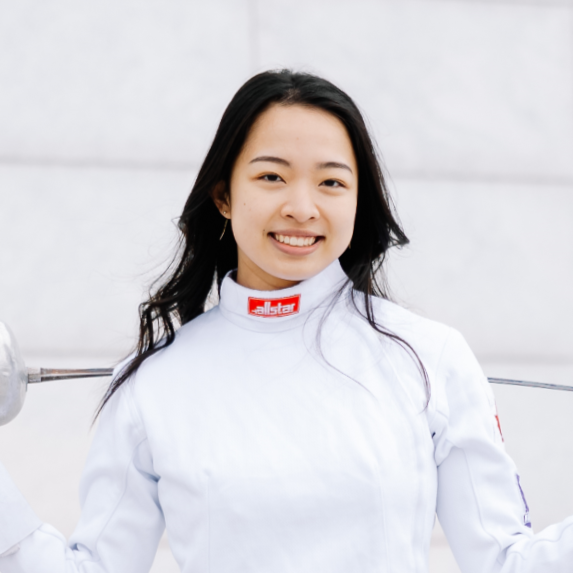
Meet your program lead
Evelyn Zheng
Head of Canadian Admissions · Team Canada Fencer · Columbia Admit → Ivey HBA
Evelyn leads our student-athlete program, coordinating academic applications around national-team training and recruitment timelines. A current Team Canada fencer and former Western University fencing captain, she was offered admission to Columbia University before choosing Ivey HBA — the same decision many of her students are navigating today. She advises student-athletes on Canadian and US program selection, application strategy, and how to tell an authentic athletic story across every part of a competitive application.
How we support student-athletes
Each part of our coaching maps to a specific challenge student-athletes face when applications and athletics collide.
- 01
Academic and athletic evaluation
We understand your interests, talents, and aspirations for school and sports. For sports, we consider whether that’s looking to go professional or simply wanting to continue a hobby in university (or anything in between).
- 02
School and program selection
We help you evaluate Canadian and US options together, weighing athletic fit, academic program, recruiting realism, and long-term goals.
- 03
Full application support
We help you develop your athletic and academic profile to put your best foot forward to your target universities. This includes coach outreach strategy and preparation, recruitment profile building, and our full suite of traditional application support services.
We work with student-athletes across a wide range of sports — including hockey, soccer, swimming, track and field, volleyball, rugby, fencing, rowing, squash, and golf — at all competitive levels from club and provincial to national team.
Why student-athlete admissions is different
Athletic recruitment and competitive academic applications run on separate — and often conflicting — timelines. Recruiting in the US starts early and can move quickly, while the most selective Canadian and US academic programs each carry their own deadlines, forms, and evaluation criteria. Managing both at once places real demand on students and families.
We help you coordinate the two: building an academic application strategy around your training and recruitment timeline, telling your athletic story authentically within your applications, and identifying the right path forward across both Canadian and US systems. The sections below cover the considerations we work through together. Coordinating application portals, deadlines, coach communication timelines, and financial aid paperwork alongside a training and competition schedule is an important part of our services for student-athletes.
Canadian University Athletics
“I competed for Western while finishing an Ivey HBA, so I know how much the right program-and-team fit matters. For Canadian athletes, training quality and team culture usually shape your experience far more than a team’s results — that’s what we help you weigh.”
Competitive options, support, and team culture differ enormously across Canadian universities and sports. These are the considerations we walk through with student-athletes and their families.
Academics
As a student-athlete, academics are inseparable from your university sport experience. The alignment of your academics with your future goals is top-of-mind for many students, but other academic considerations include:
- Is this school historically supportive and accommodating of student-athletes' training and competition arrangements?
- Is the academic program flexible enough to allow effective learning during periods of high travel or intense competition? A fast-paced program that depends heavily on in-person labs with specialized equipment is very difficult to modify for a student-athlete's competition needs, regardless of the department's willingness to help. Conversely, a smaller program with a mandatory class offered in only one timeslot may conflict with your varsity team's practice time. Consider the specific academic logistics before committing to a program-and-team combination.
- Does the athletic team have upperclassmen with experience in your academic program, or a similar one? Balancing athletics with academics is never easy, and solutions are different for everyone. Advice from senior teammates who share your experience can be extremely helpful.
For student-athletes applying to Canada’s most competitive programs — including Ivey AEO, Smith Commerce, and Rotman Commerce — academic applications involve supplementary essays, timed written responses, and video interviews that require preparation well beyond strong grades. We support applications to each of these programs. See our Canadian programs →
Many of these programs — including Ivey AEO, Smith Commerce, and Rotman Commerce — include timed or recorded video components. We offer dedicated Video Interview Preparation coaching for student-athletes who are managing training schedules alongside application prep.
“Recruiting”-adjacent perks
Aside from a select few sports, very few Canadian universities offer NCAA-style direct-entry, scholarship-heavy recruiting. However, there are increasing options for student-athletes in Canada to receive recruiting-adjacent support, depending on the school and the sport. Talk to your prospective schools’ varsity coaches to find out what is offered for your sport.
Blue-chip lists
Some schools and teams offer “blue-chip lists,” where coaches submit a list of student-athletes they believe would be an asset to their team. Usually there is no guarantee of admission, and no obligation to attend the school if you receive an offer from your target academic program. Being named on this list could unlock benefits such as GPA boosts (for your high school grades), priority for housing, and other qualitative benefits.
Athletic entrance scholarships
Some schools and teams do offer direct-entry scholarships. The scope of eligible academic programs varies, but the most competitive academic programs are usually excluded. Canadian athletic scholarships are fewer in number and smaller in amount than those in the US.
Post-admit athletic scholarships
These scholarships are usually offered by your academic program rather than the varsity team. After a student has already begun their studies at university, they can apply for program- or department-specific scholarships. Varsity coaches and athletic departments very rarely have complete lists of these. Talk to the financial aid or scholarship office of your target academic program to find out whether an athletic scholarship is available in your program of study.
Identifying and applying for competitive scholarships — including Loran, TD, and Queen’s Chancellor’s — alongside university applications is part of our Scholarship Strategy & Coaching service.
Team quality: good outcomes vs. good training
Many talented student-athletes are tempted to select a university team based on the team’s results and outcomes at competitions. However, this is not always the best indicator of training quality.
For example, a university in a metropolitan area, or close to a major sports club or training centre, may rely heavily on its athletes training independently and externally, rather than investing resources into developing its own internal training infrastructure. This dynamic can negatively affect both training quality and team culture. Conversely, some university teams with currently weaker competition results may have recently begun investing heavily in better training times, venues, equipment, and coaches. Because university tenures are short, the effects of these investments often pay off very quickly — in as little as one or two seasons.
Students exploring university athletic options benefit greatly from networking with prospective schools, from campus tours to communicating directly with coaches, team captains, and senior athletes. Because Canadian university sports are smaller communities than in the US, many members of school teams are happy to arrange tours and meetups with high school students.
For the majority of student-athletes in Canada, training quality and team culture affect satisfaction far more than competition results. However, some student-athletes plan to be recruited to national-level or professional teams after university. For them — especially in team-based sports — competition results matter much more. It is important to identify whether training quality or competition results matter more to you. A misjudgement of these factors causes dozens of student-athletes to transfer to different universities every year.
University leagues
Competitive options differ greatly across universities in Canada. Not all universities, and not all sports, have access to the same competitive regular-season leagues.
U Sports
U Sports is the closest thing in Canada to the NCAA in the United States. It is the national governing body for university varsity sports and oversees national championships across a wide range of sports. For student-athletes seeking the highest level of university competition in Canada, U Sports programs are generally the most competitive and resource-rich option.
One detail that surprises many students: not every major university sport in Canada is formally governed as a U Sports sport. Several sports with active university competition structures operate through their own national sport organizations or separate governing bodies — examples include fencing, rowing, golf, and certain combat sports. Don’t assume your sport is a U Sports sport simply because it appears in certain multi-sport games and championships, and don’t assume a sport’s absence from the U Sports championship calendar means there is no meaningful university competition available.
OUA
The Ontario University Athletics (OUA) conference is the largest and most competitive university sports conference in Canada. Many of Canada’s strongest varsity programs compete in the OUA, particularly in sports with large participation bases such as basketball, football, and soccer. For Ontario students, the OUA often offers the greatest variety of academic and athletic options, but the level of competition can vary significantly between schools and sports.
RSEQ
The Réseau du sport étudiant du Québec (RSEQ) governs university athletics in Quebec. While smaller than the OUA, the RSEQ features several highly competitive programs and has historically produced strong results in many sports. Students considering Quebec universities should be aware that team cultures, training environments, and language requirements can vary considerably between institutions.
Regional and non-varsity leagues
Not every university sport in Canada is governed through an official competitive university league. Many sports operate through regional leagues, club leagues, or independent conference structures that provide meaningful competition without official varsity designation. These programs can be excellent options for students who want to keep competing at a high level while prioritizing academics, co-op placements, internships, or other extracurricular commitments.
In some sports, the difference in training quality between a university with access to an official league and one without can be huge. In other sports, a strong non-varsity program may be just as good as a varsity program. This is particularly relevant at universities with exceptionally strong academic reputations, such as UBC and the University of Alberta, where certain sports may not have access to an official university league and therefore compete through regional or independent structures instead. Evaluate the actual training environment, coaching quality, and competitive opportunities available, rather than focusing solely on whether a team is officially designated as varsity or part of an official league.
US University Athletics

“As a Harvard undergrad I managed the men’s basketball program and led the Harvard Badminton Club, so I’ve seen both varsity and club athletics at a top US school up close. For Canadian athletes in sports like fencing, rowing, squash, and golf, that club-versus-varsity trade-off is real — we help families weigh it honestly and coordinate the full US application around the athletic timeline.”
For some Canadian student-athletes, the United States offers extraordinary academic and athletic opportunities. NCAA, NAIA, NESCAC, and other college athletic pathways can provide access to high-level competition, strong academic programs, larger athletic departments, and, in some cases, athletic scholarships.
But the US system is also more formal, more complex, and often much earlier-moving than Canadian university athletics. Athletic recruiting, academic admissions, standardized testing, financial aid, scholarship conversations, coach communication, and eligibility requirements can all overlap. Families need to understand not only whether a student is recruitable, but whether the academic, athletic, financial, and personal fit makes sense.
We help Canadian student-athletes coordinate these moving pieces so recruitment does not happen in isolation from the student’s broader university goals.
How Canadians get recruited for NCAA athletics
Canadian student-athletes are recruited in many of the same ways as American athletes: through tournament exposure, rankings, club or provincial/national team performance, coach referrals, recruiting questionnaires, highlight video, direct outreach, camps, showcases, and ongoing communication with university coaches.
The difference is that Canadian students often need to do more translation. A US coach may not fully understand a Canadian student’s school system, grading scale, course rigor, athletic pathway, club structure, or national/provincial competition context. A strong recruiting process helps coaches understand both the athlete and the student.
For many students, the process includes:
- Building a thoughtful school list that balances athletic fit, academic fit, geography, cost, and admissions realism.
- Creating a recruiting profile, résumé, or introductory email that clearly explains academic and athletic context.
- Communicating with coaches in a professional, student-led way.
- Preparing highlight video, competition results, rankings, or coach references where appropriate.
- Understanding how athletic recruitment may or may not intersect with admissions support at each school.
- Coordinating application essays, recommendations, testing, financial aid, and deadlines around the athletic timeline.
Recruitment is not just about being good enough to play. It is about finding where a coach needs your profile, where admissions is realistic, and where the university would still make sense if athletics changed.
When NCAA recruiting starts for Canadians
Recruiting timelines vary by sport, division, school, and athlete level. Some sports begin serious conversations earlier than others, and highly visible athletes may hear from programs before they are ready to make academic decisions. Students considering varsity sports at elite US academic institutions should begin the recruitment process in Grade 9 or 10, as many Ivy League and other elite coaches give out verbal commitments as early as Grade 10.
For Canadian families, early planning matters because the athletic timeline often moves ahead of the academic one. A student may need to communicate with coaches, prepare video, attend showcases, build a US school list, understand standardized testing expectations, and register with the appropriate eligibility systems before Canadian university applications are even top-of-mind.
We help families map the timeline backwards:
- When coaches may begin meaningful communication.
- When unofficial or official visits may become relevant.
- When testing, transcripts, and eligibility documents need attention.
- When applications, essays, and supplements are due.
- When scholarship, financial aid, or admissions conversations may occur.
- When Canadian options should remain open as a parallel path.
The goal is not to rush students into a decision. The goal is to prevent the athletic process from forcing rushed academic choices later.
Athletic scholarships in the United States
Athletic scholarships can be available at many US colleges, but families should be careful not to assume that recruitment automatically means a full scholarship. Scholarship availability depends on the school, division, sport, roster needs, institutional policy, academic profile, and coach’s budget. Many athletic scholarships are partial, and some highly selective academic institutions offer no athletic scholarships at all.
For Canadian families, the financial picture may include several different pieces:
- Athletic scholarship funding, where available.
- Need-based financial aid.
- Merit scholarships.
- Academic scholarships.
- International student costs.
- Travel, insurance, equipment, and family visit expenses.
- The value of Canadian university options as a financial comparison.
We help students and families ask better questions early: Is this school affordable? Does the coach have scholarship money available for this sport? Is aid need-based, merit-based, athletic, or some combination? Does the student need to apply separately for scholarships or financial aid? How does the cost compare to strong Canadian alternatives?
The best choice is not always the school with the largest athletic offer. It is the school where the academic, athletic, financial, and personal fit all make sense together.
Does getting recruited guarantee admission?
No. Athletic recruitment can be a meaningful context factor at some US universities, but it does not automatically guarantee admission. The strength of coach support, the school’s admissions process, the student’s academic record, the sport, the division, and the institution’s policies all matter.
At some schools, recruited athletes may receive significant coach support in admissions. At others, recruitment may be helpful but limited. At highly selective universities, a student still needs to be academically admissible and able to succeed once enrolled. A coach’s interest is important, but families should be careful about assuming that interest equals an admissions offer.
We help students understand the difference between:
- A coach expressing general interest.
- A coach actively recruiting the student.
- A coach offering admissions support.
- A likely, conditional, or formal admissions outcome.
- An athletic roster opportunity after admission.
Those distinctions matter. Misunderstanding them can lead students to build a school list around assumptions instead of evidence.
Where US programs include admissions interviews or video submissions, we provide Video Interview Preparation coaching as part of the application process.
Things Canadian high school students considering NCAA athletics should know
The US athletic pathway can be excellent for the right student, but it requires careful planning. Canadian athletes should pay particular attention to:
- Eligibility requirements. Students may need to submit academic records, prove amateur status, and satisfy division-specific requirements.
- Course and curriculum differences. Canadian transcripts, provincial curricula, AP/IB availability, and school profiles may need explanation.
- Standardized testing. Testing policies vary by school and cycle, and athletic recruits may face different practical expectations depending on the institution.
- Communication rules. NCAA recruiting rules vary by division, sport, and recruiting period.
- Financial assumptions. Athletic scholarships are not universal, and many awards are partial.
- Admissions fit. Athletic fit should not override academic fit, especially for students targeting selective programs.
- Long-term planning. Injuries, coaching changes, roster changes, and academic interests can all change the student’s experience.
A strong US recruitment strategy leaves room for uncertainty. We encourage students to maintain academic options in Canada and the US, especially when recruitment, admissions, and financial aid outcomes are still developing.
Top Canadian student-athletes should consider both Canadian and US options
For many athletes, the right path is not obvious at the beginning. Some students are best served by the structure and competition level of a US varsity program. Others will thrive at a Canadian university where they can pursue a stronger academic fit, train with a high-quality club or varsity team, remain closer to home, or preserve flexibility for co-op, internships, professional school, or national-team commitments.
We help families compare both systems honestly. The question is not simply “Can I get recruited?” The better question is: “Where will I grow the most — academically, athletically, personally, and professionally?” For students targeting selective US universities, we support applications to the Ivy League and elite US engineering and CS programs including MIT, Caltech, Stanford, and Columbia. For students keeping Canadian options open in parallel, we support applications to Ivey AEO, Smith Commerce, Waterloo Engineering and CS, and other competitive Canadian programs.
Not every sport is an NCAA varsity offering at US colleges
Students should not assume that every sport has the same US college pathway. Some sports are widely available across NCAA divisions; others are offered by fewer schools, concentrated in certain regions, or supported through club, varsity-club, or non-NCAA structures. Even within the NCAA, the quality of coaching, training environment, competitive schedule, facilities, and roster opportunity can vary dramatically.
For some athletes, a non-varsity or club pathway at an academically exceptional university may be a better fit than a varsity opportunity at a school that does not match their academic goals. For others, varsity competition is central to the university decision. We help students evaluate the actual opportunity, not just the label.
Frequently asked
Yes — coordinating the two is the core of what we do for student-athletes. We build your academic application strategy around your athletic timeline, track deadlines across both processes, and manage the logistics so nothing gets dropped. This is covered under our Application Logistics & Project Management service. If you’re ready to map out your timeline, the best starting point is a consultation with one of our coaches.
It depends on the school, the sport, the division, and the strength of coach support — and we’ll be direct with you about where athletic recruitment meaningfully affects admissions and where it doesn’t. Understanding that distinction early is a core part of building a realistic US school list. We work through this as part of our University & Program Selection service. You can also read more about how we support US Elite Applications for Canadian students.
US recruiting through NCAA, NAIA, and NESCAC programs is earlier, more formal, and moves on a separate timeline from Canadian university applications — which remain largely academic. The two processes require different preparation, different communication strategies, and different decision frameworks. We coach for both, and we help families compare options honestly across the two systems. If you’re weighing Canadian programs like Ivey AEO or Smith Commerce alongside US options, or looking specifically at Ivy League or elite engineering schools, reach out to speak with a coach.

Ready to find the best path — in the classroom and in your sport?
If you’re in the earlier stages of building your profile and beginning to explore athletic options in Canada or the US, we help with extracurricular strategy, program selection, and early recruiting planning.
Start with a consultationIf you’re coordinating a live recruiting process alongside Canadian or US applications, we help manage the full timeline — essays, video interviews, supplementary applications, scholarship strategy, and coach communication — all at once.
Speak to a coach